Ball speed and clubhead speed explained
What are the two speeds, in plain words?
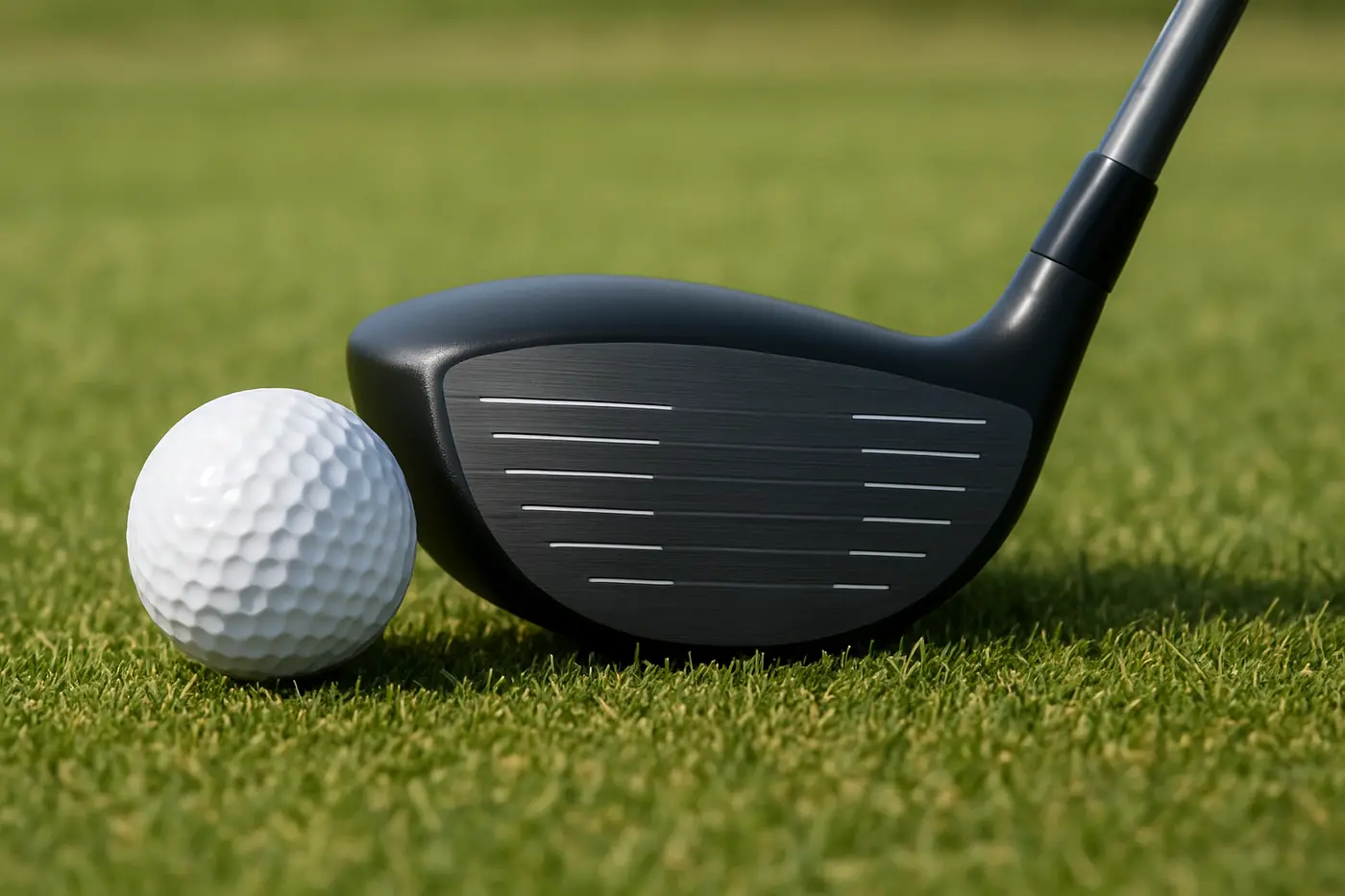
Clubhead speed is how fast the club head is moving right before it meets the ball. Ball speed is how fast the ball is moving right after it leaves the club face. Same swing, two readings.1
Bushnell describes club head speed the same way. It's the velocity of the head, read just before contact.2
Which one decides distance?
Ball speed does most of the work. Bushnell calls it the main component in generating distance.2
Trackman agrees and goes a step further. It says club speed is key to your potential distance, but the ball speed created at impact is the biggest factor in how far the ball carries.3
It even puts a rough number on it. Gaining 1 mph of ball speed can add up to 2 yards to driver distance.3
So why bother reading clubhead speed at all? Because it tells you what you brought to the ball. Ball speed tells you what the ball got. The gap between them is the interesting part, and it has its own name: smash factor. You'll find that on the smash factor page.
Why can the same swing speed give different ball speeds?
Contact. Trackman says hits off the toe or heel of the club will reduce potential ball speed. So will glancing blows from hooks and slices, and hitting too far down on the ball.3
That's why a simulator can show a steady clubhead speed and a ball speed that bounces around. If the ball number drops and the club number doesn't, look at where on the face you hit it before you blame your swing speed.3
What do typical ball speeds look like?
Trackman publishes averages for driver shots. These are Trackman's own figures in miles per hour, so that's the unit used here.3
| Group | Driver ball speed | Source |
|---|---|---|
| PGA Tour | 171 mph | 3 |
| LPGA Tour | 143 mph | 3 |
| Male amateur, scratch or better | 161 mph | 3 |
| Male amateur, average golfer (14.5 handicap) | 133 mph | 3 |
| Female amateur, 15 handicap | 111 mph | 3 |
Treat these as a rough map, not a target. A number that sits below your friend's isn't a verdict on you. Club, contact and the unit itself all feed into it.
What's a good way to read the two together?
Pick one club and hit a group of shots. Write down both speeds for each one. If clubhead speed stays close to the same and ball speed swings about, contact is the likely cause, because Trackman ties toe and heel strikes to lower ball speed.3
If both speeds fall together, the swing itself got slower.
Trackman's standard set-up for the driver is a club speed of 94 mph and an optimized carry. It gives a ball speed of 137 mph for that case. For a 6-iron at 80 mph, it gives 110 mph.3
Those pairs show that ball speed isn't just a copy of club speed. It changes with the club in your hands.3
How does a simulator get these numbers?
It depends on the unit. Bushnell's camera-based monitor captures images of the ball and compares each one with the next to see what the ball did after impact.2
For club data, that same maker says you place one of the included markers on the face of your club.2 Bushnell also notes that its club data points come through software subscription packages.2 Other makers do it differently, so check your own unit's manual to see how it reads clubhead speed and whether any of it costs extra.
Where the facts come from
- 40+ Trackman Parameters, Trackman
- What Launch Pro Measures, Ball and Club Data, Bushnell Golf
- What is Ball Speed?, Trackman
Other numbers to read
 Smash factor: what it tells youWhat smash factor means on a golf simulator, how it's worked out, and the range Trackman's own averages show for drivers and irons.
 Launch angle and spin rateHow launch angle and spin rate are measured on a golf simulator, and how backspin and the angle the ball takes off at shape its flight.
 Carry distance versus total distanceWhy a golf simulator shows two distances, what carry and total each mean, and how to tell which one to read for the shot in front of you.