Club path and face angle
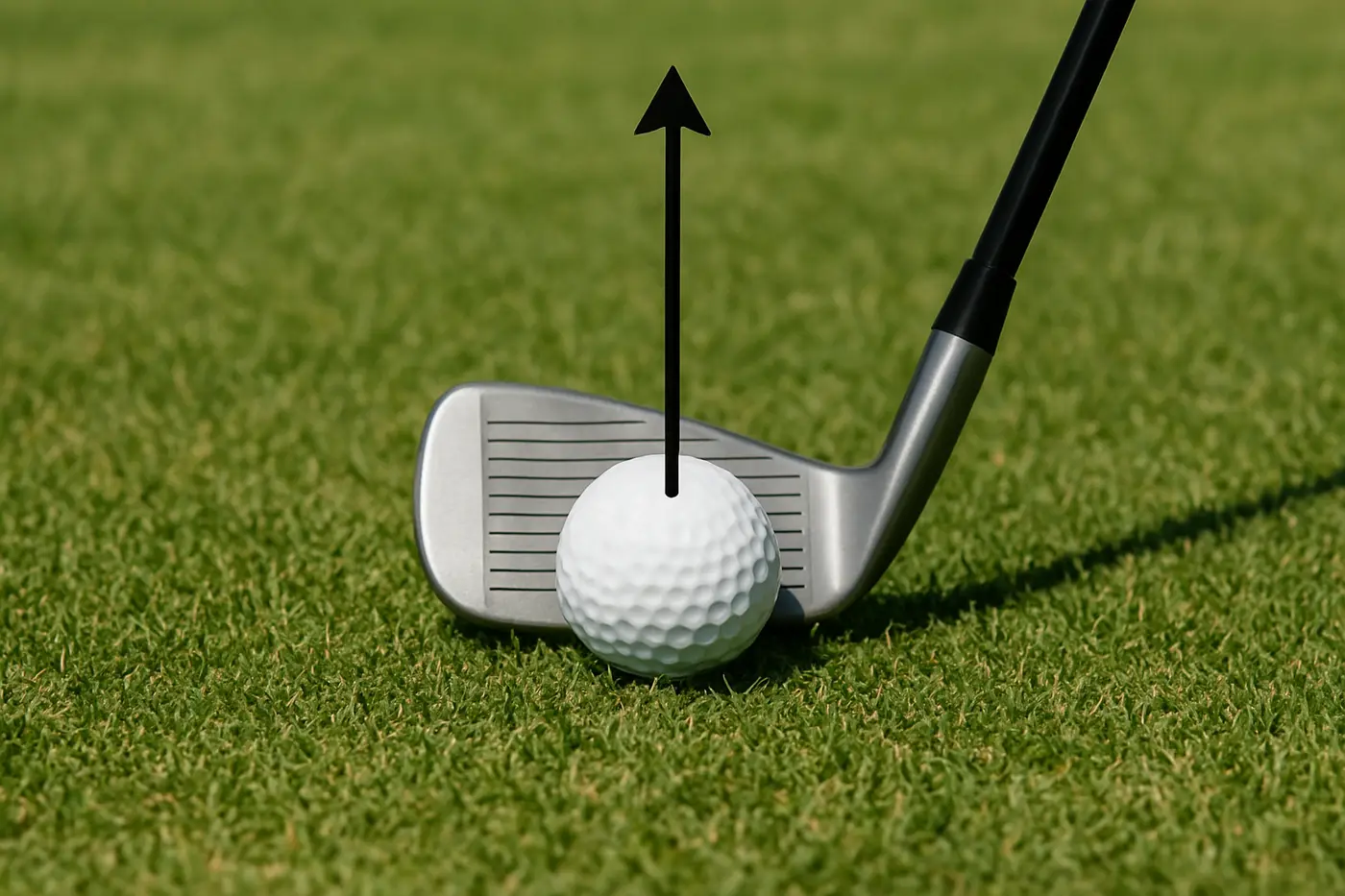
What is club path?
It's the direction the club head is travelling at impact, left or right, measured against the target line.1
A positive number means the head is moving right of the target line. A negative number means left. That's true whether you swing right-handed or left-handed.1
Most golfers know this as in-to-out or out-to-in. For a right-hander, a positive path is in-to-out and a negative path is out-to-in.1
What is face angle?
It's the direction the club face points at the moment of contact. Trackman measures it at the center point of contact between club and ball.2
Face angle answers a different question from path. Path is where the head is going. Face angle is where the face is looking.
What is face to path?
It's the difference between the two. Trackman works it out as face angle minus club path.3
For a right-hander, a negative face to path means the face is closed to the path. A positive number means it's open to the path. Zero means face and path match.3
Zero doesn't mean the face points at the target. Trackman stresses that face to path is measured against the path, not the target line. A face to path of zero could happen with the face at plus 5, at zero or at minus 5.3
How does that make the ball curve?
With a centered strike, the ball should curve toward the face angle and away from the club path whenever face to path isn't zero.3
Path still matters, though. Trackman says path helps set the curve and also helps decide which way the ball starts. It also says an in-to-out path is needed for a draw, and an out-to-in path for a fade.1
Wikipedia describes the two worst cases. A hook happens when the face is closed to the swing path, or the path is inside-out. A slice happens when the face is open to the path, or the path is outside-in.4
How big is the curve?
Trackman gives examples for centered hits. For a tour player's driver with a 275 yard carry, a face to path of 5 degrees makes about 44 yards of curve to the right. A face to path of minus 2 degrees makes about 19 yards to the left.3
On a 6-iron with a 183 yard carry, 2 degrees gives about 8 yards to the right and minus 5 degrees gives about 20 yards to the left.3
Trackman gives these in yards, and they're for tour-level carries.
What should I read first on my screen?
Start with face to path, because it gives the shape. If it's near zero, the ball should have little or no curve. If it isn't, check the sign. A positive number means the face is pointed right of the path. A negative one means left.3
Near zero doesn't mean the ball heads at the target. Where it starts still depends on where the face and path point compared with the target line, and Trackman says path is part of what determines the starting direction.1
Then look at path to see which way the head is moving.1
The result of all this shows up as the spin axis number. For how to read that one, go to spin axis.
Where the facts come from
- What is Club Path?, Trackman
- 40+ Trackman Parameters, Trackman
- What is Face to Path?, Trackman
- Golf stroke mechanics, Wikipedia
Other numbers to read
 Ball speed and clubhead speed explainedWhat ball speed and clubhead speed measure on a golf simulator, how the two differ, and which one has more say over how far the ball carries.
 Smash factor: what it tells youWhat smash factor means on a golf simulator, how it's worked out, and the range Trackman's own averages show for drivers and irons.
 Launch angle and spin rateHow launch angle and spin rate are measured on a golf simulator, and how backspin and the angle the ball takes off at shape its flight.